
|
WASHINGTON
— President Obama unveiled a revamped White House Office of Faith-based
and Neighborhood Partnerships on Feb. 5, but postponed a decision on
whether religious groups can discriminate in hiring, an issue that has
bedeviled similar government projects.
“The
goal of this office will not be to favor one religious group over
another — or even religious groups over secular groups,” Obama said at
the National Prayer Breakfast, where he announced the new office.
“It
will simply be to work on behalf of those organizations that want to
work on behalf of our communities, and to do so without blurring the
line that our founders wisely drew between church and state.”
Obama
has said his project will be a new and improved version of former
President George W. Bush’s Office of Faith-based and Community
Initiatives, which was created in 2001. Like Bush, Obama created his
faith-based office by executive order.
But
Obama’s office will be supplemented by new a 25-person advisory
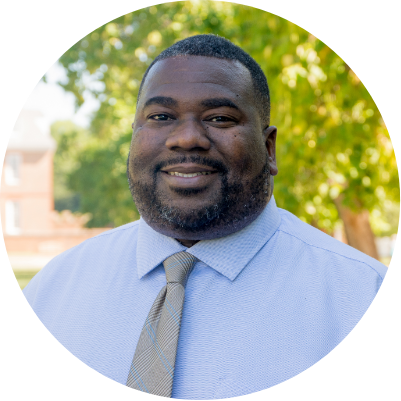
council. Leading the White House office will be Joshua DuBois, a
26-year-old Pentecostal pastor who headed religious outreach for
Obama’s presidential campaign.
“Joshua
understands the issues at stake,” Obama said in a statement, “knows the
people involved, and will be able to bring everyone together — from
both the secular and faith-based communities, from academia and
politics — around our common goals.”
Obama
said the office’s top priority will be “making community groups an
integral part of our economic recovery” and relieving poverty. The
office will also address teenage pregnancy, abortion reduction, and
“support fathers who stand by their families,” especially young men.
“There
is a force for good greater than government,” Obama said in the
statement. “It is an expression of faith, this yearning to give back,
this hungering for a purpose greater than our own, that reveals itself
not just in places of worship but in senior centers and shelters,
schools and hospitals ... .”
In a shift
from the Bush administration, the office will play a role in foreign
policy, the White House said, working with the National Security
Council to encourage interfaith dialogue.
The
announcement fulfills a campaign pledge Obama made in July to expand
and upgrade Bush’s faith-based office, which Obama had criticized as an
under-funded “photo-op.”
For the most
part, religious leaders across the theological spectrum praised the
announcement. But the new president has already backed away from one
campaign promise, according to some scholars and activists.
In
July, Obama said that religious groups will not be able to use federal
grants to proselytize or to hire only members of their own faith. The
issue presents a unique challenge for the president, who boasts a
background in community organizing and constitutional law. Religious
groups say hiring co-religionists is essential to their identity and
mission; others argue that federal funds should not be used to
discriminate.
The executive order Obama
signed Feb. 5 avoids a clear statement on hiring practices, instead
saying that the office may “seek the opinion of the Attorney General on
any constitutional and statutory questions.”
Rabbi David Saperstein, a member of the new advisory council and
director of the Religious Action Center of Reform Judaism, said “the
hiring issue is going to be dealt with by Josh (DuBois), the White
House counsel and the attorney general’s office.”
“I think it’s wise to kick it over to the lawyers,” said Mark Silk, an
expert on religion and politics at Trinity College in Hartford, Conn.
“It’s very complicated, but there’s no question it’s a walking back on
his campaign position.”
Church-state watchdogs are already howling over the lack of clear hiring guidelines and the new faith-tinged advisory panel.
“President Obama launched his faith-based initiative today by heading
into uncharted and dangerous waters,” said Caroline Fredrickson,
director of the Washington legislative office of the American Civil
Liberties Union. “There is no historical precedent for presidential
meddling in religion — or religious leaders meddling in federal policy
— through a formal government advisory committee made up mostly of the
president’s chosen religious leaders.”
Of the 15 people named to the advisory council so far, several are
evangelicals, including the Rev. Jim Wallis, executive director of
Sojourners; Frank Page, the former president of the Southern Baptist
Convention; and megachurch Pastor Joel C. Hunter of Longwood, Fla.
The panel also includes the Rev. Larry Snyder, president of Catholic
Charities USA; Bishop Vashti McKenzie of the African Methodist
Episcopal Church; and Richard Stearns, president of World Vision, a
Christian humanitarian organization. Council members are appointed for
one-year terms.
|